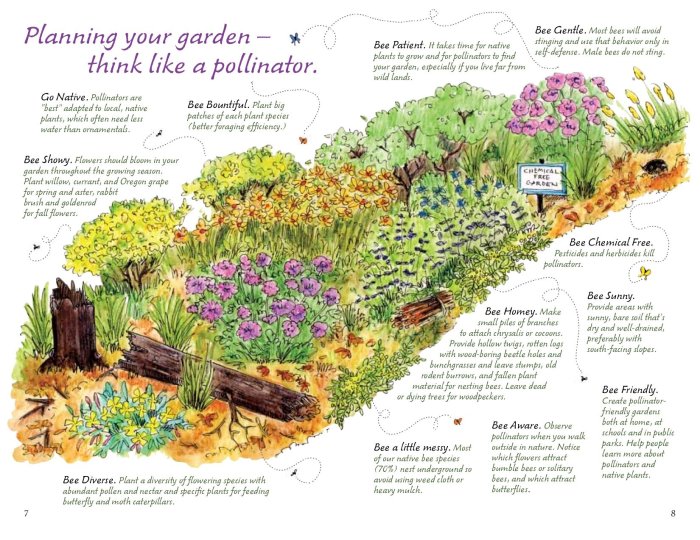
Embark on a journey into the world of garden ideas tailored to attract pollinators, exploring the beauty and benefits of creating a thriving ecosystem in your own backyard.
Discover the allure of specific plants, colors, and scents that beckon bees, butterflies, and other pollinators to your garden oasis.
Garden Ideas for Attracting Pollinators

Creating a pollinator-friendly garden is not only beneficial for the environment but also adds beauty and vibrancy to your outdoor space. By planting specific types of plants, utilizing different colors and scents, you can attract bees, butterflies, and other essential pollinators to your garden.
Types of Plants That Attract Pollinators
- Lavender: Known for its fragrant blooms, lavender attracts bees and butterflies to your garden.
- Sunflowers: With their bright yellow petals, sunflowers are a favorite of bees and birds.
- Butterfly Bush: As the name suggests, this plant is a magnet for butterflies with its sweet scent.
Colors and Scents That Attract Pollinators
Bees are particularly attracted to colors such as blue, purple, and yellow. Planting flowers like blue salvia, lavender, and sunflowers can help draw them to your garden. Additionally, fragrant herbs like mint, thyme, and basil can entice pollinators with their enticing scents.
Functional Spaces in the Garden
Creating functional spaces within a garden involves designing areas that serve specific purposes, such as relaxation, dining, or entertainment. These spaces not only enhance the overall aesthetics of the garden but also provide practical use for homeowners and guests.
Relaxation Corner or Reading Nook
To create a relaxation corner or reading nook in the garden, consider placing a comfortable seating area surrounded by lush greenery or fragrant flowers. Add a small table for books or beverages, and consider incorporating a water feature or wind chimes for a soothing atmosphere. Using outdoor rugs or cushions can also enhance the coziness of the space.
Dining or Entertainment Areas
For dining or entertainment areas in the garden, designate a spot with a sturdy table and chairs for outdoor meals or gatherings. Consider adding a grill or outdoor kitchen for cooking, along with ambient lighting for evening events. Incorporating a fire pit or outdoor fireplace can extend the usability of the space into cooler months, providing a cozy setting for socializing.
Interior Design Elements in the Garden
Integrating interior design elements into outdoor spaces can greatly enhance the overall aesthetic appeal of your garden. By carefully selecting furniture, lighting, accessories, colors, and textures, you can create a welcoming and stylish outdoor retreat that reflects your personal style.
Using Furniture to Enhance the Garden’s Aesthetic
When choosing furniture for your garden, opt for pieces that are both functional and visually appealing. Consider weather-resistant materials like teak or metal that can withstand outdoor conditions. Arrange seating areas strategically to create cozy gathering spots and focal points in your garden.
Utilizing Lighting for Ambiance
Lighting plays a crucial role in setting the mood in your garden. Incorporate soft, ambient lighting with string lights, lanterns, or solar-powered fixtures to create a warm and inviting atmosphere. Highlight key features of your garden with spotlights or uplights to add drama and interest to the space.
Accessorizing with Style
Accessories such as outdoor rugs, throw pillows, and decorative planters can add a pop of color and personality to your garden design. Choose accessories that complement your overall color scheme and style to create a cohesive look. Consider incorporating elements like water features or sculptures for added visual interest.
Importance of Color Coordination and Texture Selection
When decorating your outdoor space, pay attention to color coordination and texture selection to create a harmonious design. Choose a color palette that complements your garden’s existing flora and fauna. Mix and match different textures like wood, metal, and fabric to add depth and visual interest to the space.
Elevate your outdoor space with these innovative ideas and watch as your garden transforms into a vibrant hub of life and activity, all thanks to the power of pollinators.
User Queries
How can I attract more pollinators to my garden?
To attract more pollinators, consider planting a variety of native flowers, providing a water source, and avoiding pesticide use.
What colors are most attractive to pollinators?
Pollinators are often attracted to bright colors like red, purple, yellow, and blue, so incorporating flowers in these hues can help draw them to your garden.
Are there specific herbs that attract pollinators?
Herbs such as lavender, sage, and mint are known to attract pollinators like bees and butterflies with their fragrant blooms.


